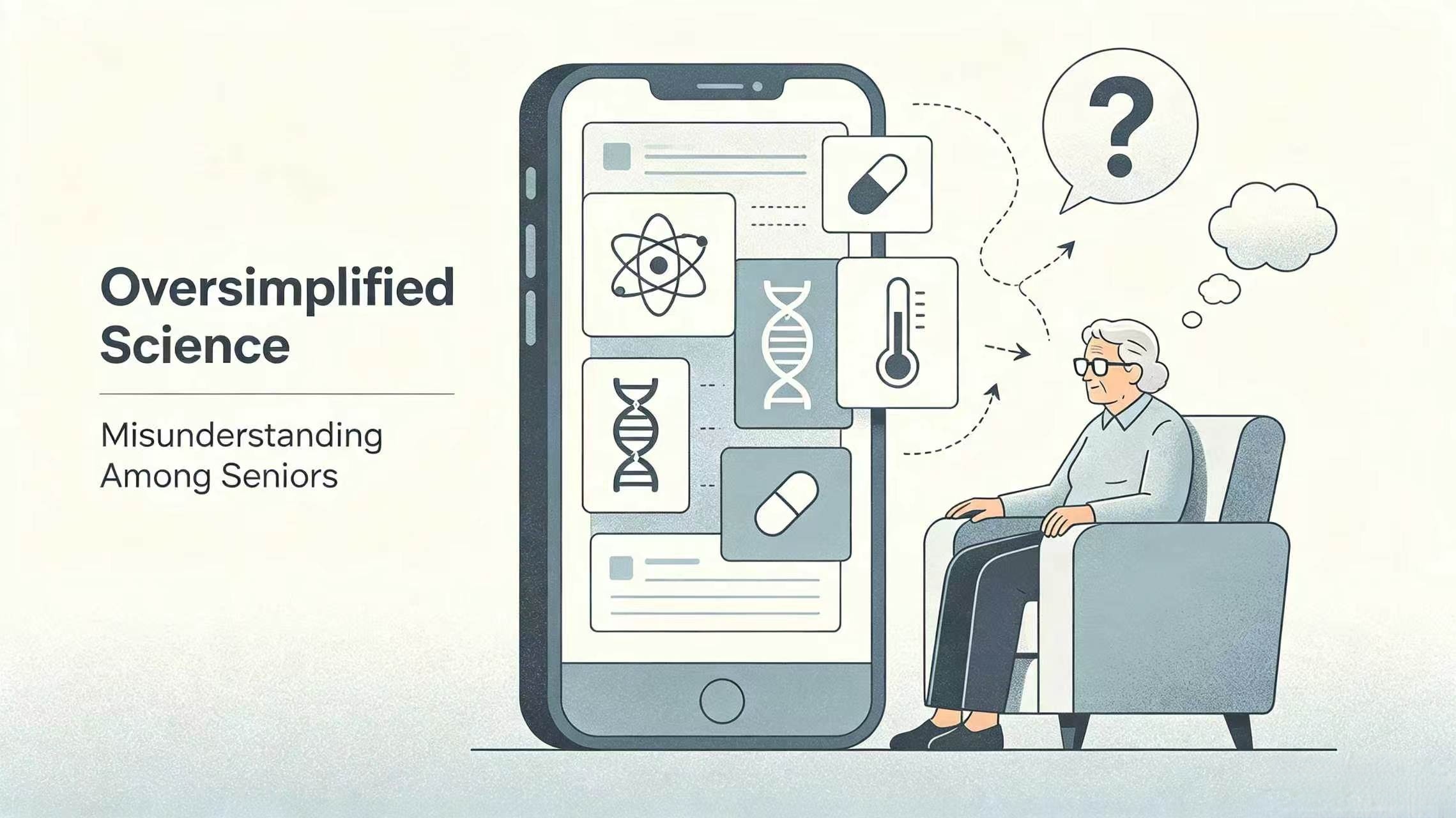
Over the past decade, short-video apps have become the major way millions of Chinese seniors access new information. While short videos can spread knowledge quickly, a worrying problem has grown: many technology and science videos simplify complex ideas far too much. This trend creates serious cognitive bias among older viewers.
Firstly, many creators often cut out critical details to fit tight, short video lengths. However, scientific conclusions depend on many conditions, yet many short videos frequently present one-sided conclusions without context. For example, some short videos talk about health technology or nutrition with absolute statements, ignoring exceptions and reliable research data. This is called the “illusion of understanding”. Viewers feel they have mastered professional conclusions after watching a one-minute video.
In addition, older viewers are more likely to accept these simplified explanations without questioning. Most older viewers lack training in digital information checking. Once they trust context presented in a confident tone, they often share it within family chat groups, letting misconceptions spread quickly. Unlike younger internet users, they rarely search for official sources to double-check facts.
In conclusion, short-video platforms offer chances to make technology accessible to people without higher education. Nevertheless, making science easy to understand doesn’t mean removing its complexity. Until balanced and careful scientific videos become more common, oversimplified videos will continue to deepen harmful misunderstandings.
© 2026 Andrew Hale, licensed under CC BY-NC 4.0.
Commercial use without written permission is prohibited.